Sector · Housing disrepair

Housing disrepair costs.

Understand the costs of bringing or defending a housing conditions claim: legal fees, surveyors, court fees and funding deductions. Repairs, compensation and legal costs are different parts of the outcome, and a small damages figure does not settle the costs question.

Qualified Costs Lawyers, regulated by the Costs Lawyers Standards Board (CLSB), supported by experienced Costs Draftsmen.

Speak to our team

How can we help?

Tell us about your costs question and any deadline.

Your details are used to respond, not for marketing.

Advice from individually CLSB-regulated Costs Lawyers.

Prefer to call? 020 4538 3944

Quick answer

Who pays the legal costs in a housing disrepair claim?

If a tenant's claim succeeds or settles, the landlord is usually ordered or agrees to contribute to the tenant's legal costs, but the amount depends on the track and the rules that apply. Where a claim seeking repairs is worth £1,000 or less for repairs and £1,000 or less for other damages, it can be a small claim with very limited costs recovery. Any shortfall or success fee depends on the tenant's funding agreement.

Key figures (checked 13 November 2026)

Small claims limit for tenant repair claims
Repairs and other damages each £1,000 or less
Source: CPR Part 26
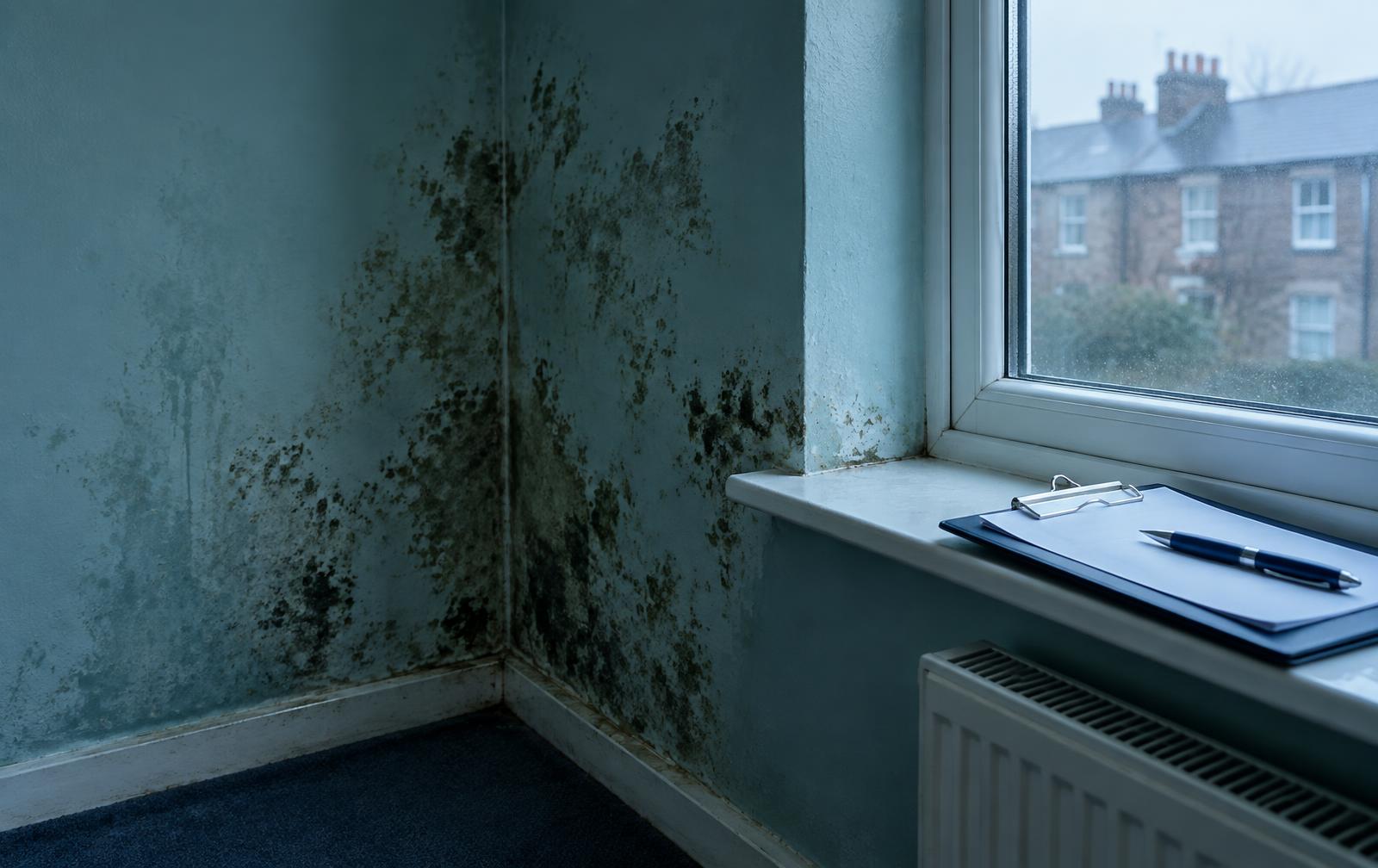
Black mould spreading across the corner of a rented home beside a window and inspection clipboard
Housing conditions claims are often modest in damages but significant in costs.

Overview

Housing disrepair costs, explained.

Written by Thomas Higginbottom

A housing claim can seek repairs as well as damages. The repair estimate and the damages claimed can therefore affect the court track and recoverable legal costs. Your own solicitor’s agreement answers a different question: what you may have to pay personally. Before proceeding, ask about survey fees, funding, possible deductions and exposure to the landlord’s costs. A landlord should distinguish the repair expenditure from the tenant’s legal costs claim.

Costs explained

The costs in a housing disrepair matter, and how each is dealt with

“Legal costs” covers several different payments. This table separates what is spent, who usually pays it first and what normally happens to it at the end.

Type of costTypical examplesWho usually pays firstHow it is normally dealt with
Solicitor feesReviewing tenancy documents, notices, photographs, disclosure, negotiations and court preparation.The client under the agreed private, conditional or legal aid funding arrangements.Recovery depends on entitlement, allocation, settlement terms and the applicable costs rules. Routine or repeated correspondence can be challenged even when the claim succeeds.
Surveyor or other expertInspection, defect report, costed repair schedule and, where relevant, medical evidence.Commissioned under the funding terms; a joint instruction may specify how the fee is shared initially.The protocol encourages agreement over experts. Keep the instruction and invoice; disputed or duplicate reports are not automatically recoverable from the other party.
Court and hearing expensesIssue and application fees, counsel and permitted hearing-related expenses.Usually paid or arranged by the party taking the step, subject to funding or fee remission.Small-claims recovery is restricted. Outside that route, the costs order and applicable fixed or assessed regime determine what can be claimed.
Actual repairs and compensationBuilding work, replacement items and compensation for the effect of the disrepair.The landlord’s obligations and any settlement or judgment determine responsibility.These are not solicitor fees. A costed repair schedule helps explain allocation and non-monetary relief, but the repair cost is not itself an extra legal fee.
Funding deductions and adverse costsAny success fee, insurance premium, client shortfall or order to pay the other party.The retainer, insurance and court orders determine liability.Check whether a proposed settlement includes costs and what may be deducted from damages. The small-claims route limits ordinary legal-costs recovery but has exceptions; it is not zero risk.

How the payments fit together: an illustrative journey

  1. A tenant commissions or agrees an inspection under clear funding terms. The costed repair schedule and damages calculation inform the relief sought and likely court track.
  2. Repairs may be agreed before issue. The settlement should say separately what happens to compensation and legal costs; completion of building work does not itself settle the legal bill.
  3. Where costs remain disputed, the parties check entitlement and the applicable route before debating the amount. The tenant also receives a separate explanation of any deduction required by their own retainer.

Complex matters

Higher-value and contested disrepair claims

Some disrepair claims involve serious health effects, vulnerable occupants, long periods of neglect or personal injury elements alongside the housing claim. Others raise disputes over the scope of the landlord’s obligations, access for repairs or whether the protocol was followed. Those issues can affect allocation, conduct arguments and the costs entitlement. The value of repairs and the importance of non-monetary relief matter alongside the damages, although all work still needs justification.

01

Repair expenditure, damages and the legal bill: keep three totals

A landlord paying for repairs is not necessarily paying the tenant’s solicitor. Equally, a tenant receiving compensation has not necessarily received an allowance covering every legal expense. Read the settlement as three separate items: what work will be done, what damages will be paid and how legal costs will be resolved.

For a tenant, ask whether legal expenses insurance or legal aid is available before signing a funding agreement, and what conditions apply. For either side, preserve access arrangements, inspection evidence and repair dates: they can help explain why work was necessary or whether avoidable expense was incurred. When a solicitor proposes a deduction, request the contractual basis and calculation rather than assuming it is authorised because compensation was won.

02

Preserve the value of repairs as well as damages

Keep the costed survey, repair schedule, pleaded damages calculation and settlement terms. Housing conditions litigation may seek an order requiring repairs as well as compensation, so a modest damages settlement does not tell the whole allocation or proportionality story. Under CPR 26.9, the residential tenant small-claims provisions require attention to both the estimated repair cost and the other damages claimed.

Before settling, clarify whether costs are agreed, reserved or subject to assessment, and which work the agreement covers. An informal promise to discuss costs later may leave an avoidable dispute about entitlement. For a paying party, check whether the repair evidence and scope of the claim support the costs route asserted.

03

A file-level check before a portfolio approach

A consistent drafting method is useful across a disrepair caseload, but each file still needs its own evidence. Record access offered or refused, disclosure received, expert instructions and the dates repairs were proposed or completed. Distinguish correspondence that advanced the dispute from repeated administrative chasing. A template narrative cannot explain material differences between properties and occupants.

Conduct allegations and wasted costs applications require their own legal tests; a failed claim does not automatically make the solicitor personally liable. Our CLSB-regulated Costs Lawyers help identify the evidence relevant to a costs challenge. Check the current housing-specific Part 45 provisions and commencement rules rather than assume an older announcement settles whether costs are fixed.

04

Why allocation matters so much

The track affects recoverable costs. For the special residential-tenant small-claims provision where an order for repairs is sought, both the estimated repairs and the other damages claimed must be not more than £1,000. These are separate tests, not a combined £2,000 allowance. Damages-only claims and other allocation factors need separate consideration under CPR 26.9.

Settlement before issue does not remove the question. Paying parties often argue that a pre-issue claim would have been a small claims matter, so evidence of the likely repair cost and damages at the time is important.

05

Fixed costs and housing claims

CPR 45.1(4) excludes qualifying residential possession, disrepair and unlawful-eviction claims from the fast-track and intermediate-track fixed costs in Sections VI and VII, subject to the boundary-dispute exception. Paragraph (5) preserves that exclusion if the housing element concludes. Do not assume an old proposed introduction date means those tariffs now apply. Other costs restrictions, including small-claims rules, still need checking.

Where costs are assessed rather than fixed, proportionality still applies. Hourly rates, the grade of fee earner and the time spent on routine correspondence are regular areas of dispute in disrepair Bills.

06

Protocol compliance and conduct

The Pre-Action Protocol for Housing Conditions Claims expects early disclosure, a single joint expert where possible and a genuine attempt to agree repairs. Failure by either side to engage can affect costs, both in the main claim and on assessment.

Dates of access requests, disclosure and repair proposals help explain who caused avoidable work. A conduct allegation should identify the events and extra expense rather than rely on an assertion that the other party was generally uncooperative.

07

Volume work and detailed assessment

A Bill should describe the particular property, occupants, defects and procedural history. Repeated work across a portfolio does not remove the need to show what was actually done on this claim and whether it was necessary.

Where entitlement exists but the amount cannot be agreed, the applicable provisional or detailed assessment procedure can resolve it. The parties should weigh its expense against the amount in dispute rather than assume every contested item merits a hearing.

08

Damages, repairs and proportionality

A paying party will often compare the costs claimed with the damages recovered. Proportionality is assessed against the sums in issue, the complexity of the claim and any wider factors, including the value of the repairs obtained and the importance of the matter to the tenant.

We present the full benefit achieved, not only the damages figure, and for landlords we test whether the work claimed was genuinely necessary given the progress of repairs and the issues left in dispute.

Frequently asked questions

Housing disrepair costs questions

Can legal costs be recovered in a housing disrepair claim?

Often, yes, but the amount depends on the track the claim would have been allocated to, whether fixed costs apply and the reasonableness and proportionality of the work done.

Are housing disrepair claims small claims?

For the special residential-tenant rule where repairs are sought, both the estimated repair cost and the other damages claimed must be not more than £1,000. The tests are separate. Damages-only claims and other allocation considerations must be checked under CPR 26.9.

Does the landlord paying for repairs cover my solicitor’s bill?

Not automatically. Repairs are substantive relief, while the legal costs contribution depends on the settlement or court order. Your own retainer may also leave a client shortfall. Ask for all three elements to be explained separately.

Can compensation be reduced by legal fees?

Potentially, depending on the funding agreement and applicable law. Ask for a breakdown of the proposed success fee, insurance and any unrecovered charges, and compare it with what was explained at the outset.

Do modest damages automatically make the legal costs disproportionate?

No. The court also considers the non-monetary relief, complexity, conduct and other applicable factors under CPR 44.3. Evidence of the repairs sought and achieved matters. That does not remove the need for reasonable work and proportionate overall costs.

What documents help resolve an allocation dispute?

The costed survey, repair schedule, damages calculation, pleadings, relevant orders and settlement agreement are important. They help establish the relief sought and likely allocation rather than relying solely on the eventual compensation figure.

This page provides general information, not advice on a specific case. Rules and figures change, so check the current position for your matter. Contact our team to discuss it.

Rules and further reading

Other sectors: Personal injury, Clinical negligence, Commercial litigation, Industrial disease, Court of Protection, Professional negligence, Employment tribunal.

Discuss a housing disrepair matter

Discuss a matter

What is your next costs question?

A bill to challenge, a budget to prepare or a hearing ahead? Tell us about the matter and any deadline.

Practical preparation

Understanding the cost of repairs and litigation separately

Distinguish the remedy from the legal account

A housing outcome may involve repairs, compensation and costs, each with a different financial meaning. Make clear what the settlement requires the landlord to do and what sums address legal expenses. A promise to undertake repairs is not the same as payment of every charge incurred by the tenant. Keep surveyor evidence, correspondence and the funding agreement available when reviewing the costs position.

Explain inspection and evidence costs

Inspection reports, photographs and further expert work may be needed to establish the condition of the property and proposed remedies. Record their purpose and expense, particularly if further visits become necessary. Allocation and costs recovery depend on the applicable rules, claim and dates; a housing label alone does not determine the regime. Ask what the tenant may still owe and how any deduction will be explained at settlement.

More questions about this topic

Does an agreement to repair settle the legal costs too?

Not necessarily. Read the settlement wording to identify whether costs are included, reserved or separately payable.

Why might surveyor costs be disputed?

Their purpose, amount or recoverability may be questioned. The instruction, report, invoice and procedural context help explain the expense.

Can I assume every disrepair claim has the same costs rules?

No. The remedy sought, allocation, dates and applicable provisions need checking for the particular claim.

The people behind the advice

Thomas Higginbottom & Robert Collington

Thomas’s settlement and disputed recovery work and Robert’s bill preparation experience help identify what the housing settlement actually resolves and which expenses require explanation.

Thomas Higginbottom

Thomas Higginbottom

Director & Costs Lawyer · CL1794

Thomas Higginbottom is a director of Arc Costs and a Costs Lawyer who qualified in 2024 after completing the ACL course. Regulated by the Costs Lawyers Standards Board (CL1794), he specialises in inter partes costs disputes, negotiations, Points of Dispute and Points of Reply.

Profile & recent articles
Robert Collington

Robert Collington

Director & Costs Lawyer · CL1601

Robert Collington is a director of Arc Costs and a CLSB-regulated Costs Lawyer (CL1601). He has worked in legal costs since 2010, completed the ACL course and qualified in 2020. His practice includes legal aid billing, complex inter partes recovery, Bills of Costs and costs budgeting.

Profile & recent articles

Both completed the ACL course. The Costs Lawyers are individually regulated by the Costs Lawyers Standards Board; regulation does not apply to the company or every member of the drafting team.